--24 million lost in coverage
--880 (later cut to 814) billion in cuts to Medicaid (resulting in a loss of coverage of 14 of the 24 million)
While the current iteration made some changes (e.g. more funding of high-risk pools), the consensus is that this will not be enough to improve coverage. Also, it does not restore funding to Medicaid, which is certain to result in coverage losses (despite their assertions otherwise).
The Incidental Economist helpfully summarizes what I think is at the root of the AHCA--tax cuts for those with higher incomes. They summarize a report from the Brookings Institution and the Urban Institute, which is summarized nicely in these two charts:
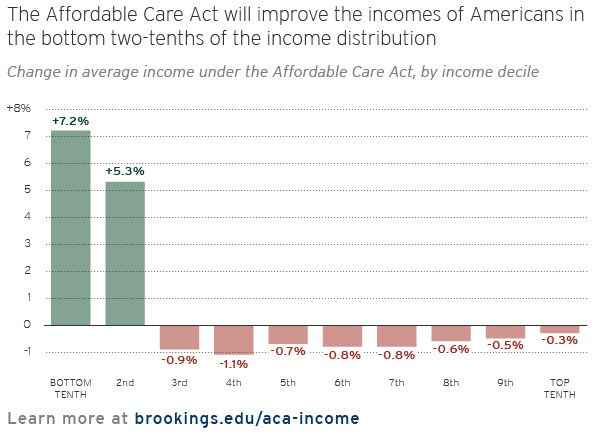

Notice anything? Essentially, under the AHCA, those in the lower income brackets will see their incomes DECREASE, compared to a net INCREASE under the ACA.
Why this difference? What is the driving philosophy behind reducing incomes of already low-income Americans in favor of increase incomes of the already well to do?
Rep. Mo Brooks from Alabama may have inadvertently told us why--folks who are sicker are so because of poor lifestyles, choices, or behaviors, and should pay more than healthy folks. Here is the money quote:
"And right now, those are the people who have done things the right way that are seeing their costs skyrocketing"
Others have chimed in with similar sentiments:
"That doesn't mean we should take care of the person who sits at home, eats poorly and gets diabetes." --Mick Mulvaney, WH Budget Chief
"Best to mandate nothing. Let the customer decide. A 60-year-old couple doesn’t need maternity coverage. Why should they be forced to pay for it? And I don’t know about you, but I don’t need lactation services."--Charles Krauthammer, Washington Post Columnist
While these are politically minded statements, it is not uncommon to hear similar sentiments in Chrisitan circles as well. How many have expressed feelings of anxiety or depression to their Christian friends, only to be met with the verse from Philippians ("Don't be anxious about anything...through prayer and petition...") or Psalms ("The righteous cry out, and the Lord hears them; he delivers them from all their troubles."
Articles like this from Charisma Magazine certainly do not help, clearly indicating that illness is due to a lack of faith and obedience. It also takes little time to do a search for stories of people with chronic illnesses being chastised by their fellow believers for their 'lack of faith' (see here, for example).
The clear implication, from both camps, is that if you are poor, sick, or otherwise in a bad way, it is not only your fault, but your lack of effort (either through work or faith) are preventing you from pulling yourself out of it. Never mind any structural issues that may be preventing you from doing so (i.e. lack of job opportunities, medical debt, barriers due to the conditions, etc. - another discussion for another day).
I think once you understand this underlying philosophy, that is both in conservative and Christian minds, you can better understand how certain policies are created and advocated for by these folks, despite their apparent harm.

No comments:
Post a Comment